New - 4 Days Ago





Since the industry-wide changes that followed the August 2024 NAR settlement, agents in both Texas and Oklahoma are now required to have a signed, written buyer representation agreement in place before touring homes with a buyer — not after. We don't love having to ask for a signature before you've even seen a house. But it's the rule now, and here's honestly what it does and doesn't mean for you.
For years, buyers could tour homes with an agent on a handshake, with the paperwork showing up later — often at the point of writing an offer. Since the practice changes took effect, MLSs in both Texas and Oklahoma, along with state licensing rules, require the agreement signed up front. The intent is transparency: you know exactly how your agent gets paid and what they're agreeing to do for you before you ever walk through a door.
Real estate is one of the few professions that openly shares how much its people are paid. Think about getting a haircut: the prices are posted, and nobody asks you to sign a contract before you sit in the chair. Buying new tires for the truck works the same way. You see the price, you agree to it, and you drive off without signing anything. Real estate is strange this way. The compensation is spelled out in writing, in advance, and now signed before we show you a single home.
We also hear a lot that agents should cut their commissions. Most professions do not negotiate their prices, and nobody haggles with the barber or the tire shop over their rate, yet agents are routinely asked to discount theirs. We think the question worth asking is what the work includes: the showings, the advice, the negotiation, the paperwork, and the problem-solving between contract and closing. Compensation is negotiable, and that is exactly why we put it in writing up front, so you know what you are agreeing to and what we are agreeing to do for you.
What it is not: a lifetime contract, a fee charged on top of what you'd otherwise pay, or something that traps you into working with an agent you don't want to keep working with. If a shorter, single-showing version makes more sense for where you are in your search, ask for that — it's a normal, reasonable request.
Without this agreement, buyers historically had less clarity on who their agent actually represented, how that agent got paid, and what obligations existed on either side. The written agreement puts all of that in front of you before you commit any time to touring — which, in a competitive market like Lake Texoma, protects both sides from misunderstandings once an offer is on the table.
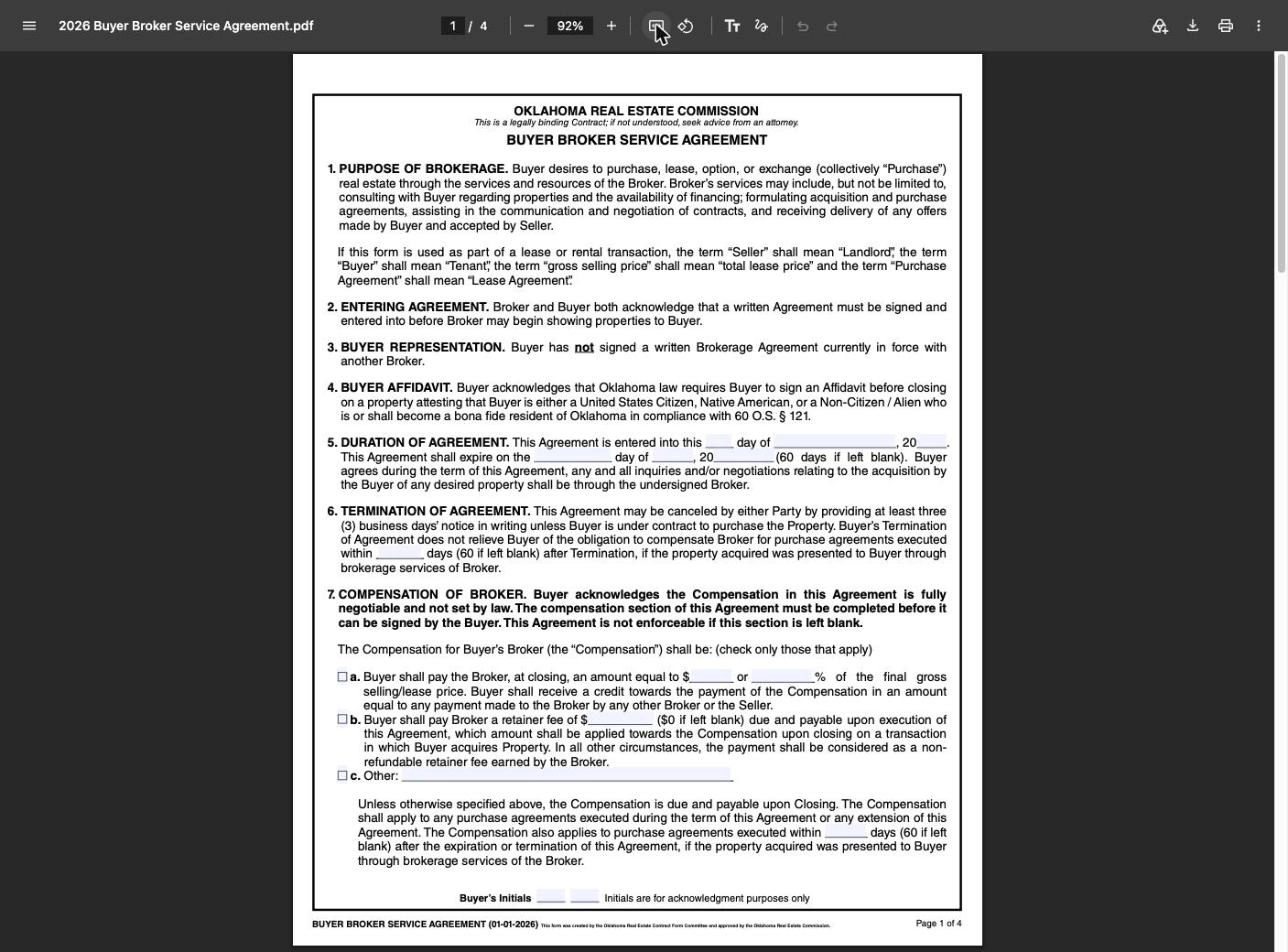
The Oklahoma Real Estate Commission (OREC) publishes a free standard Buyer Broker Service Agreement and a plain-language FAQ that explains it. Read both before you sign anything, ours or any other agent's:
Per OREC's FAQ, the agreement can run for as short as one day or as long as 12 months, the compensation is a specific amount you can negotiate, and your agent should explain the compensation, term and termination terms before you sign. The form itself notes it is a legally binding contract and that you may want an attorney to review it. These are Oklahoma forms; for a Texas purchase, ask us to walk you through the Texas version.
We'd be lying if we said this didn't add a step to the start of every buyer relationship. But the upside is real: you get clarity on compensation and scope before we ever get in the car to go look at houses, and you're never locked into something broader than what you actually agreed to. If you have questions about what you're signing, ask us — we'd rather walk through it line by line than have you sign something you're unsure about.
Verify current specifics with TREC (Texas) or OREC (Oklahoma) directly, since rules in this area have continued to evolve since 2024. This is Part 2 of our "What We Wish Every Buyer Knew" series — next: the real difference between pre-qualified and pre-approved, and why it can cost you the house.


Guides & Resources
For Buyers
Buying a Home in TexomaFirst-Time Home Buyer ProgramsNative American Homebuyer ProgramsThe Closing ProcessNew Construction GuideBuying Land & AcreageLenders & Local Pros