





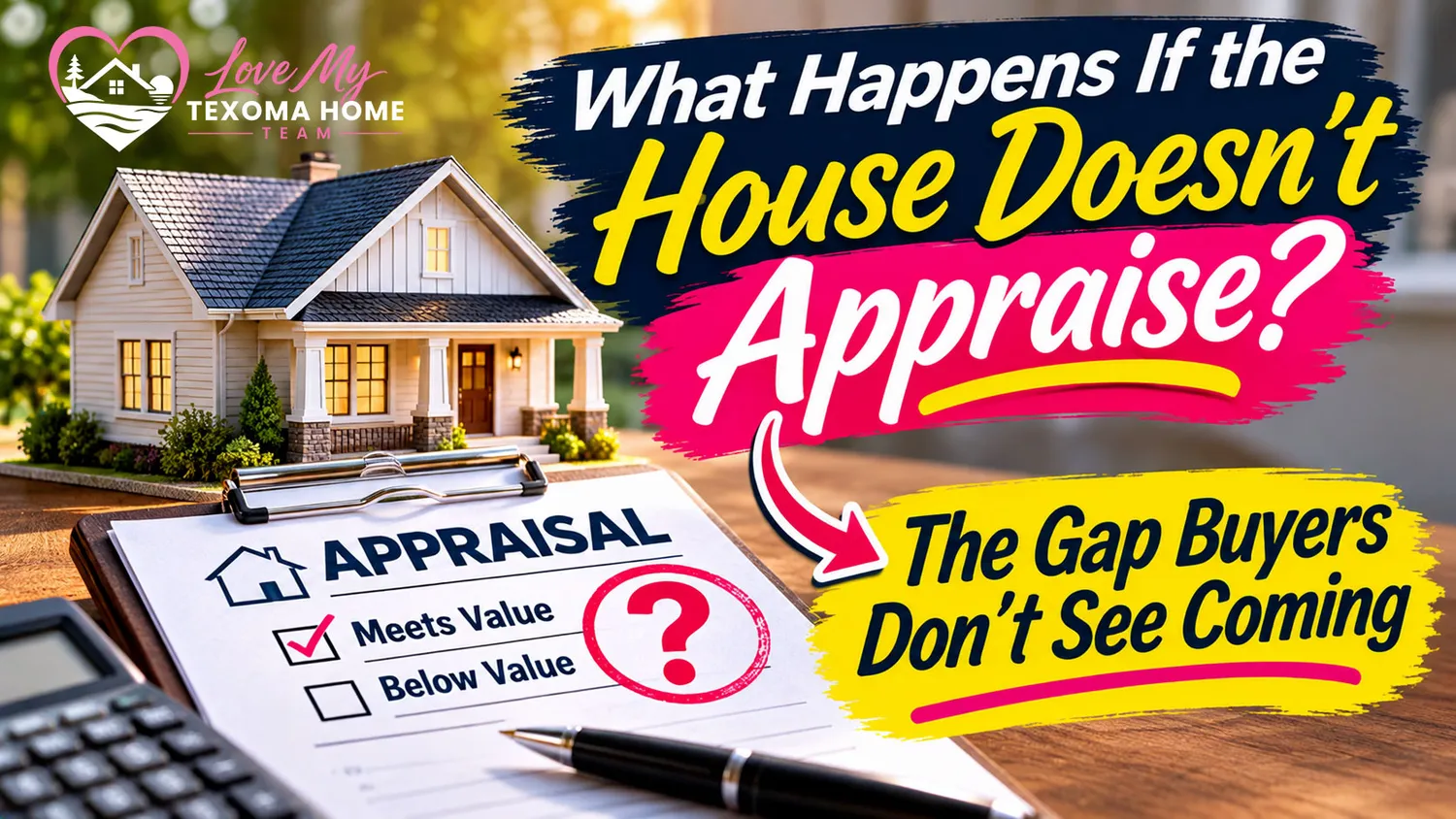
An appraisal gap happens when a home is under contract for more than the bank's appraiser says it's worth. When that happens, your lender won't loan against the higher price — leaving you with three real options: renegotiate with the seller, cover the gap in cash, or walk away if you have an appraisal contingency.
It's most common in competitive, multiple-offer situations, where a buyer offers above list price to win a well-priced property. The lender's appraisal is based on comparable recent sales, not on how badly a buyer wants the house — so in a fast-moving market, the appraisal can lag behind what buyers are actually willing to pay.
The best protection against an appraisal gap is knowing what the home is actually worth before you write the offer. That is what a Broker Price Opinion (BPO) is for. Your agent runs comparable sales, looks at condition, location, and how similar homes have really sold, and gives you an informed opinion of value. A BPO is not a formal appraisal, and the lender's appraiser still has the final say on the number the bank will loan against. But a good agent's comps will tell you whether you are walking into a gap and by how much.
Think about the last time you asked your agent, "What do you think it's worth?" If the answer was a blank stare, a shrug, or "well, it's whatever someone will pay," you were flying blind. A real estate professional should be able to back up an opinion with real, recent comparable sales. If your agent can't run comps and give you a BPO, that's a red flag, and it is a good reason to find an agent who can.
Before you offer above list price, ask your agent for:
Our team runs comps on every property before we advise a buyer or a seller. Brian is a broker, not an appraiser, but he has years of experience running comps and BPOs, and that is the kind of local, data-backed opinion that keeps you from overpaying. To see what the day-to-day job really involves, read what a real estate sales consultant actually does.
The lender will only finance based on the appraised value (times your loan-to-value ratio), not the contract price. The difference between the contract price and the appraised value is the "gap," and someone has to cover it in cash if the deal is going to close at the original price:
In competitive offers, some buyers include language upfront agreeing to cover some or all of an appraisal gap in cash, up to a stated amount, to make their offer more attractive to the seller. This can help win a competitive property, but only agree to it after you've actually confirmed you have that extra cash available if the appraisal comes in low — don't offer gap coverage you can't actually deliver on.
This is the risk of waiving an appraisal contingency to make an offer more competitive: if the appraisal comes in short and you can't or won't cover the gap, you may be contractually obligated to close anyway or risk forfeiting your earnest money. Understand exactly what you're waiving before you waive it — ask your agent to walk through the actual downside scenario, not just the upside of a stronger-looking offer.
This is Part 6 of our "What We Wish Every Buyer Knew" series — next: what closing costs actually cover beyond your down payment.


Guides & Resources
For Buyers
Buying a Home in TexomaFirst-Time Home Buyer ProgramsNative American Homebuyer ProgramsThe Closing ProcessNew Construction GuideBuying Land & AcreageLenders & Local Pros